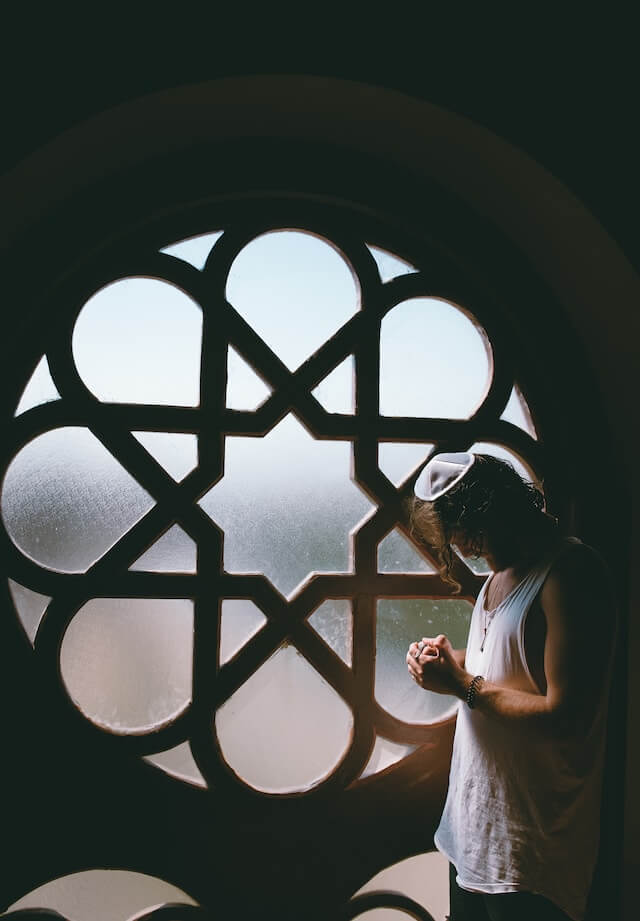
KRISTALLNACHT COMMEMORATION CONCERT The Night of Broken Glass
On November 9–10, 1938, the Nazis staged vicious pogroms—state sanctioned, anti-Jewish riots—against the Jewish community of Germany. These came to be known as Kristallnacht (now commonly translated as “Night of Broken Glass”), a reference to the untold numbers of broken windows of synagogues, Jewish-owned stores, community centers, and homes plundered and destroyed during the pogroms. Encouraged by the Nazi regime, the rioters burned or destroyed 267 synagogues, vandalized or looted 7,500 Jewish businesses, and killed at least 91 Jewish people. They also damaged many Jewish cemeteries, hospitals, schools, and homes as police and fire brigades stood aside. Kristallnacht was a turning point in history. The pogroms marked an intensification of Nazi anti-Jewish policy that would culminate in the Holocaust—the systematic, state-sponsored murder of Jews.
KRISTALLNACHT COMMEMORATION CONCERT
The Night of Broken Glass
with
Ron Selka, principal clarinetist of the Israel Philharmonic
Brian Schuldt, cello
Steven Vanhauwaert, piano
in a program of music by
Ben-Haim, Ullmann, Zemlinsky and Brahms
Thursday, November 8, 2012 7:30 PM
Valley Beth Shalom, 15739 Ventura Boulevard, Encino
Tickets $10 in advance, $15 at the door
For reservations, call Valley Beth Shalom at (818) 788-6000
Reservations close at 3:00 PM on Wednesday November 7th
From Encino Patch 11/9/12
"On November 8, people gathered at Valley Beth Shalom to commemorate 'Kristallnacht' (the 'Night of Broken Glass'). A musical program was put together by the Jewish Music Commission of Los Angeles to memorialize what was lost during the Nazis' anti-Jewish riots, known as pogroms, in Germany on November 9 and 10, 1938.
The name 'Kristallnacht' refers to the broken windows of synagogues, Jewish-owned stores, community centers, cemeteries, schools, hospitals and homes plundered and destroyed during the pogroms. At least 91 Jewish people lost their lives. The Holocaust that followed claimed the lives of 6 million
Richard Braun, the chairman of the Jewish Music Commission, said that several survivors of the Holocaust, including Hellmuth Szprycer, who was in Berlin the night of Kristallnach, attended the concert. Szprycer was sent to a concentration camp at Thereisenstadt. Szprycer was selected to go there because he was a musician, said Braun.
'Thereisenstadt was set up as a model camp by the Nazis to try to tell the world that things were not so bad," said Braun. "While there he played in a band, and met Viktor Ullmann, one of the composers whose composition was on [Thursday] night's program. They were both sent to Auschwitz—he survived, Ullmann did not. Szprycer is an amazing person—he lost all his family, but is so full of life and humor.' "
Music by Ben-Haim, Ullmann, Zemlinsky and Brahms was performed by Ron Selka, the principal clarinetist of the Israel Philharmonic, Brian Schuldt, cello, and Steven Vanhauwaert, piano.
It was really "who knew" - unheard-of-music of the highest level! The audience was rivited by the calibre and complex character of the music, which achieved the utmost level of any music of the period. The performance was truly world-class; one could not imagine a finer rendition of the famed Brahms Sonata for Clarinet and Piano.
The audience responded with pin-drop silence during the performances, with enthusiastic applause at the end of each piece. This program was a real gift to the community.
PROGRAM
RON SELKA, clarinet
BRIAN SCHULDT, cello
STEVEN VANHAUWERT, piano
Paul Ben-Haim: Three Songs without Words (1952) for cello and piano
Viktor Ullman: “Variationen Und Fuge Uber Ein Hebraisches Volkslied”
from the 7th piano sonata (1944)
Johannes Brahms: Sonata in f minor for piano and clarinet, Opus 120, No.1 (1894)
allegro appassionato
andante un poco adagio
allegretto grazioso
vivace
INTERMISSION
Alexander Zemlinsky: Trio for clarinet, cello, and piano, Opus 3 (1895)
allegro ma non troppo
adagio
allegro
Yamaha Piano Courtesy of Keyboard Concepts